My sweet cousin Jentry sent me a link to this NPR article titled "In Which, Emphatically And Forever, I Decline To Care About How Books Smell."
It says it much better than I attempted to and it's funny to boot.

Tuesday, March 29, 2011

Monday, March 28, 2011
SShhh, don't tell him about the Kindle
or the host of other very successful e-readers on the market today. In preparation for my thesis project I have been going back over my old notes from my coursework. I read this article entitled "10 reasons why the internet is not a substitute for the library" and this reason got me riled about my favorite soap box topic.
#6 Hey, Bud, You Forgot about E-book Readers
Try reading an e-book reader for more than a half-hour. Headaches and eyestrain are the best results. Besides, if what you’re reading is more than two pages long, what do you do? Print it. Where’s a tree hugger when you really need one? Moreover, the cost of readers runs from $200 to $2,000, the cheaper ones being harder on the eyes. Will this change? Doubtless, but right now there’s no market forces making it change. Will it change in less than 75 years? Unlikely! A-freakin-men!
How silly must he feel right about now when Kindle sales exceeded 8 million last year?
I don't disagree that libraries are very important for many reasons, but I reject the idea that libraries are at war with technology. In fact, if you work in a library or have ever been in one, you know that is just plain silly.
Have you seen those "I pledge to read the written word" icons on blogs? As if to suggest that printed words are better, more enlightened than digital ink and that authors need our tactile observance to survive and write good books. My husband and I have contemplated creating an "I pledge to only read cuneiform on stone tablets" icon for my blog, but that seemed a bit too snarky.
The point is, reading is reading and one form, as long as it works for you, is not superior to another. But what about potentially loosing your e-books? E-books don't really let you own titles. What about the feel of a book in your hands? I love a real book for those reasons - but they are not about reading; they are about having, owning and touching - not bad things - but not about content consumption.
Luddites and techies - we are all in this together. Buy or check out, download or pull back the cover, paper or digital, whatever. Just read.
#6 Hey, Bud, You Forgot about E-book Readers
Try reading an e-book reader for more than a half-hour. Headaches and eyestrain are the best results. Besides, if what you’re reading is more than two pages long, what do you do? Print it. Where’s a tree hugger when you really need one? Moreover, the cost of readers runs from $200 to $2,000, the cheaper ones being harder on the eyes. Will this change? Doubtless, but right now there’s no market forces making it change. Will it change in less than 75 years? Unlikely! A-freakin-men!
How silly must he feel right about now when Kindle sales exceeded 8 million last year?
I don't disagree that libraries are very important for many reasons, but I reject the idea that libraries are at war with technology. In fact, if you work in a library or have ever been in one, you know that is just plain silly.
Have you seen those "I pledge to read the written word" icons on blogs? As if to suggest that printed words are better, more enlightened than digital ink and that authors need our tactile observance to survive and write good books. My husband and I have contemplated creating an "I pledge to only read cuneiform on stone tablets" icon for my blog, but that seemed a bit too snarky.
The point is, reading is reading and one form, as long as it works for you, is not superior to another. But what about potentially loosing your e-books? E-books don't really let you own titles. What about the feel of a book in your hands? I love a real book for those reasons - but they are not about reading; they are about having, owning and touching - not bad things - but not about content consumption.
Luddites and techies - we are all in this together. Buy or check out, download or pull back the cover, paper or digital, whatever. Just read.
Monday, February 28, 2011
Book Review: Jerusalem Reading
I snatched this from something I wrote when we were in Jerusalem but never publicly posted. It's a bit outdated, but useful for readings related to our time there.
I reread Everything is Illuminated. It's one of my favorite books, and this time I got about 2/3rds through it before I lost the thread. It's much further than I got last time, so that's something. It's a beautiful, thought provoking, heart breaking, and life celebrating book...that is difficult to entirely "get". Maybe that's why I like it. If you want to think about something or be completely baffled, you should read it. It's about family, history, religion, identity (specifically Jewish Identity), what it means to "love" someone, and a host of other things.
I reviewed Foer's second novel "Extremely Loud and Incredibly Close" in earnest on the Provo City Library Staff Review Blog (when I was employed there, wipe a tear).
Four Mothers: Horn, Shifra: Picador: 288 (old habits die hard)
I had never heard anything about this author or this book and it was a pleasant surprise. It told the story of four generations of women living in Jerusalem through the war of 1948, the Jordanian Occupation (48-67) and then the 6 day war in 1967. It was epic and sad (two things I love) and did a great job of fleshing in the un-thought-of details of history. Great storytelling.
I actually didn't finish this book. It is a series with several books following that detail the lives of Rashi's daughters. (Rashi is an actual well known Jewish Medieval Rabbi.) At first I loved the slow reveal of what life was like for this Jewish group in Medieval France, but after a while it just didn't hold my attention. It would be great for a YA historical fiction read, but I just wasn't in the mood. I might try it again later.
Owf. That's how I feel about this book. There were moments of genius, but most of the book was a little pretentious and a little contrived. One moment of genius occurs near the end where the story of Job is retold backwards through the familial history of one of the main characters. As if to say that the parameters of our present are the product of our our ancestor's tragedy. When we choose good and happiness despite every historical reason not to we are confirming God and refusing to deny him. That part stole my heart, but the rest of it just irked me. Horn didn't give reader's the chance to read between the lines before shoving the obvious down our throats. Take it or Leave it.
Karen Armstrong is really something. A historian, a religious historian who still thinks that religion is good is hard to come by and she is the perfect balance of skeptical historian and good willed faith affirm-er. This book is a readable history of Jerusalem and the Holy Land in general. Fabulous.
Another repeat. Last night I almost put it away, but then It reminded me of how good it is. Similar themes as "Everything is Illuminated" (the authors are married afterall....) and similarly bizarre and thought provoking.
You might have noticed that every single book I'm reading is about Jews or Jewishness. Well, when in Rome! (er Israel) It's been a good cultural exercise along side living here. I've also read a slew of travel books - I can't get enough of them.
Friday, February 25, 2011
Book Review: The Lotus Eaters
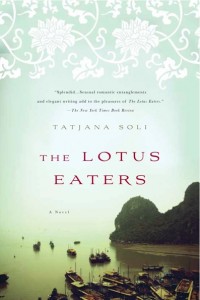
I am often frusterated with fiction because there is so much telling and so little showing, but I have to say, Tatjana Soli's debut novel "The Lotus Eaters" is a triumph of fiction - vividly showing us the lush landscapes of Vietnam and the devastating realities of war. On a micro scale this book is about the relationships a female war photographer creates during Vietnam and the way she is forever changed at its end, but it is also a much larger narrative about the depths of destruction encountered in war and its slow seduction. It's about "going native" and becoming placeless after the intense experiences of life.
This novel is beautiful, gripping, and utterly transportive. A great adventure and eye opener about war on a personal level.
Subscribe to:
Posts (Atom)